Three Scenes From Alicia Matthew's 2026: The Risk, The Room, and The Ritual
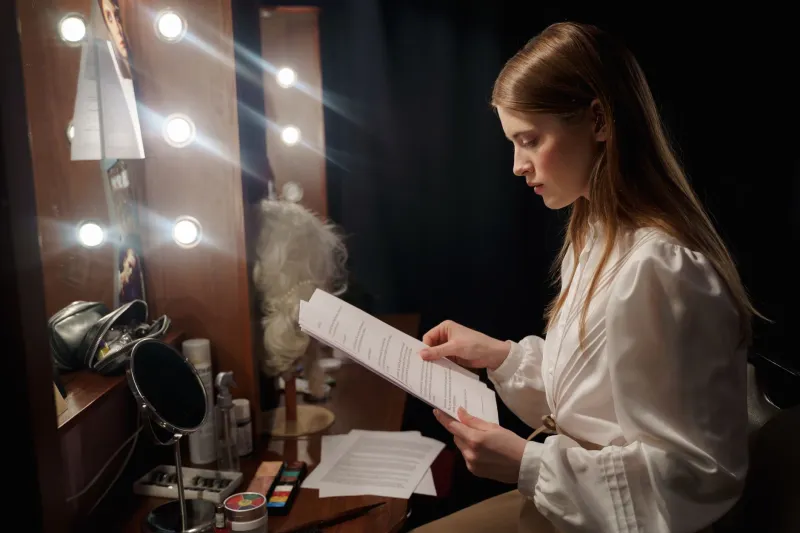
Year-end stories tend to flatten a busy season into a tidy list of wins. Alicia Matthew's 2026 does not cooperate with that approach. Ask her about the past twelve months and she does not begin with red carpets or release dates. She begins with the moment she almost said no.
That is not false modesty. It is how she talks about work now: specifically, carefully, and with attention to the parts that do not fit in a caption. As the year winds down, she walked through the three scenes that defined 2026 for her, plus the small offstage ritual she plans to carry into 2027.
The Project She Almost Passed On
The project was an independent film called 'Paper Harbor', a small ensemble drama with a tight shooting schedule and a role that sat much quieter than anything she had played before. On paper, it looked like a risk with no obvious payoff. In practice, it became the job she kept bringing up all year.
She nearly turned it down. The timing was bad. The part required a kind of stillness she was not sure she could sustain on camera. And she had convinced herself that the production would be better off with someone else. 'I had a very elegant speech ready about why it was not the right fit,' she says. 'It was mostly nonsense. It was fear in a nice outfit.'
What changed her mind was a long dinner with the director, who did not pitch her on awards or optics. He pitched her on the character's interior life. She said yes before dessert. The shoot was not easy. There were long days, cramped locations, and a budget that required everyone to pitch in. But the role gave her a new way to think about preparation: less about filling every silence, more about trusting what is already there.
By the time 'Paper Harbor' premiered in the spring, she had stopped calling it the project she almost passed on. It was the project that reminded her why she likes the work.
The Interview That Changed the Script
The press moment she did not see coming was not a splashy cover story. It was a long-form interview for a public radio show, recorded in a small studio with a host who asked unusually direct questions. Alicia arrived with the usual set of talking points. She left with a different way of explaining her career.
The host asked her what she wants people to feel when they watch her work. Not what she wants them to buy, not what she hopes they review, not what she wants them to remember about her. Just the feeling. She paused for so long that she worried the tape had stopped.
'I had never answered that honestly in an interview,' she says. 'I had answered it professionally. There is a difference.'
Her answer, eventually, was that she wants people to feel less alone in whatever specific thing they are carrying. That sounds simple. For Alicia, it was a reset. Since then, she has stopped saying she hopes people like a project and started asking whether the work is clear about what it is trying to do. That shift has made press days feel less like a performance and more like a conversation.
It has also changed how she talks to fans. She is less interested in handing out polished slogans and more interested in explaining the choices behind a scene, a song, or a schedule. The surprising part, she says, is that the plainer language has connected better. 'People can tell when you are reciting,' she says. 'They would rather hear you think.'
The Offstage Ritual That Stuck
The ritual is not glamorous. Every Sunday night, Alicia sets a twenty-minute timer and does what she calls the closing shift. She writes three lines on an index card: what worked that week, what she is releasing, and what she is protecting. Then she charges her phone outside the bedroom, makes a pot of something easy for the next day, and lays out her first outfit of the week. The card goes in a small wooden tray by the door.
She started the practice during a crowded stretch of 2026, when her calendar had more moving pieces than usual. It was not a wellness overhaul. It was a way to stop Monday morning from feeling like a fire drill. The three lines gave her a filter. The phone rule gave her a break. The pot of food gave her one less decision.
What surprised her was how quickly the ritual became the part of the week she looked forward to most. It is not a productivity system, she insists. It is a way of closing one door before opening another. 'I do not need every week to be profound,' she says. 'I just need to know where I left my keys and what I said yes to.'
She is taking the closing shift into 2027. Not because it fixed everything, but because it made a busy season feel more human. The index cards are stacking up. Some weeks sound ambitious. Some weeks say 'sleep' and 'call your sister' and little else. Both kinds count.
What Carries Into 2027
If 2026 had a theme for Alicia, it was not momentum. It was attention. The project she almost passed on taught her to question the story she tells herself about what she can handle. The interview taught her that plain language can be more useful than a polished answer. The ritual taught her that a small container for the week can make the big stuff less noisy.
She is not making grand resolutions for 2027. She is keeping the index cards. She is asking better questions in interviews. She is saying yes more slowly and meaning it more often. And she is leaving room for the kind of project that scares her just enough to be worth the risk.
For fans who have followed the year closely, that may be the most revealing part. The highlight reel is not the point. The point is the life that makes the reel possible.