Before the Doors: What Alicia Matthew Looks for in an Empty Venue
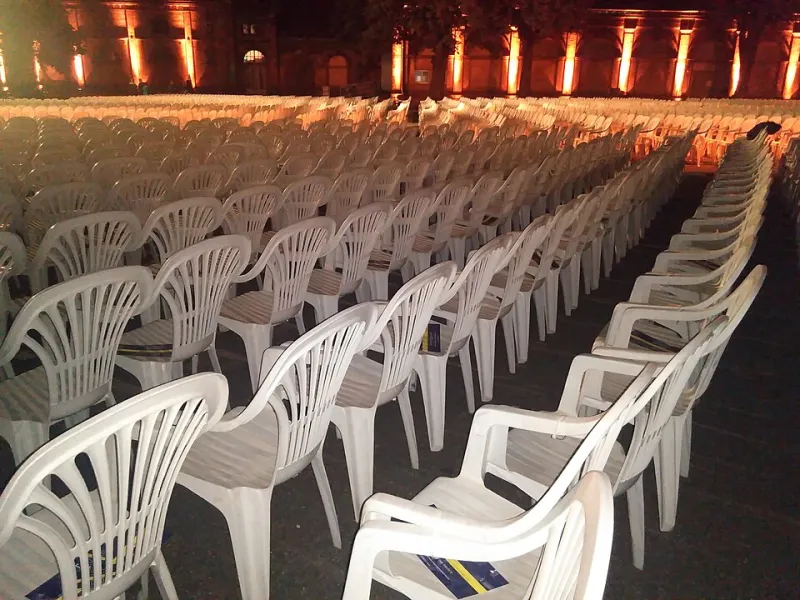
Photo: Hrrg123, CC BY-SA 4.0, via Wikimedia Commons
Most tour rituals are built for comfort: a certain tea, a certain playlist, a certain chair with the right kind of back support. Alicia Matthew’s is built for information.
Before soundcheck on the 2026 run, she walks the venue alone. Not the stage, not the dressing room, not the hallway where the crew is taping down cables. The whole room. Back row to front, side aisles to the sound booth, eleven minutes on the clock. No phone, no entourage, no running commentary. Just a performer meeting a space before the space fills up with people.
It sounds small. It is small. But it explains a lot about the way her shows land.
Eleven Minutes, No Audience
The walk starts after the doors are still locked and the house lights are still up. Crew members are finishing load-in, and the room has that hollow, pre-show smell of carpet cleaner and cold air. Matthew moves through it like someone checking a rental car before a long drive: not suspicious, just thorough.
She starts at the back. This is the part most performers skip, because the back row is where the illusion is thinnest. Up close, a stage can feel intimate no matter what. From the last seat in the house, you learn whether the room will actually hold the show or just tolerate it.
She checks sightlines from a few angles. She looks at the exits, not in a bureaucratic way but in the way anyone thinks about a room where a few hundred people will be standing, sitting, filing out, and finding their friends. She walks the side aisles. She stands near the sound booth. She finds the corner where the room feels loudest, even when it is empty.
That last part is the one her team talks about most. Every venue has a pocket where sound gathers differently, where a laugh will bounce, where a quiet moment might get swallowed. Matthew wants to know where that pocket is before she sings a note.
What She Is Actually Reading
The eleven-minute walk is not a soundcheck. It does not replace one. It is closer to a conversation with the room before anyone else joins in.
Sightlines are the obvious piece. If a fan in the cheapest seat cannot see the show, the show is already working against itself. Matthew’s 2026 dates lean toward theaters, clubs, and rooms of a certain scale, but scale does not guarantee intimacy. A 900-seat room can feel like a living room or a bus terminal depending on where the stage sits and where the audience’s attention goes.
Exits matter too. Not just for safety, which is the baseline, but for flow. A room with a bad exit plan feels restless before anything happens. People arrive late, squeeze past knees, lose the thread of the opening song. Matthew reads that geometry early.
The loudest corner is the least practical thing she checks and maybe the most revealing. In an empty venue, it is not really loud at all. But she is listening for where energy will pool once the room is full: the bar side, the back wall, the aisle where ushers tend to stand. That is where she will aim a glance, a pause, a between-song story. It is how a show starts to feel like it is happening with the audience instead of at them.
The Soundcheck That Isn’t a Soundcheck
By the time actual soundcheck begins, Matthew has already made a map. She knows where the room will feel warm and where it will feel distant. She knows which side of the stage will get the early laughs and which corner might need a little extra attention.
That map does not get written down. It does not need to be. It shows up later in small choices: where she stands during a certain song, which part of the audience she addresses before the encore, how long she lets a silence sit before filling it.
This is the part of performance that does not photograph well. There is no dramatic backstage moment, no pre-show huddle with a speech. It is just a person walking an empty room, looking up at the lights, checking a corner, moving on.
But it fits the way Matthew talks about her work. She is not a performer who treats a venue as a blank canvas. She treats it as a collaborator with opinions. The room has a shape. It has a temperament. It has places where sound dies and places where it blooms. The walk is how she listens back.
Why Fans Feel It Without Seeing It
Audiences will never watch the eleven-minute walk. They arrive later, after the doors open, after the floor fills in, after the room has become a different animal entirely. What they feel is the result: a show that seems to know where they are sitting.
That is not magic. It is preparation. It is the difference between a performer who steps onstage and hopes the room comes to them and one who has already gone out to meet it.
On the 2026 run, Matthew has kept the ritual even on tight travel days. Some venues are grand. Some are cramped. Some have the charm of a recital hall and the acoustics of a parking garage. The walk adjusts. Eleven minutes is not a lot of time, but it is enough to notice what matters.
Then the doors open. The room changes. The map gets tested. And somewhere in the middle of the first song, the work of those quiet minutes turns into something the audience can actually feel: a performer who is not just in the venue, but in the room.