The Quietest Part of the Night: Alicia Matthew’s No-Music Ride Home
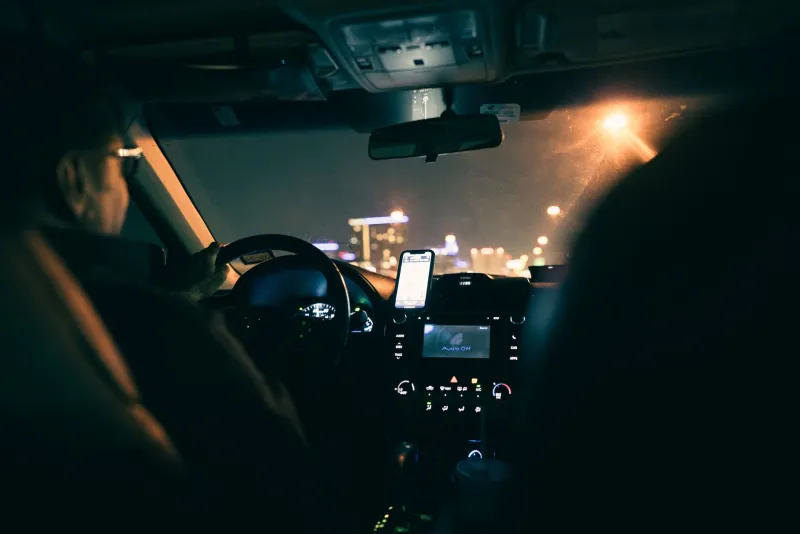
Most performers leave a venue with something playing. A favorite album, a hype track, a voice memo of the night’s best moment. Alicia Matthew leaves with nothing. The engine hums, the tires roll, and the phone stays face-down in the cup holder. That’s the whole soundtrack.
On a 2026 tour that has moved through theaters and arts centers across the U.S., this no-music ride home has become one of the most quietly discussed parts of her offstage life. It is not a stunt, and it is not a rejection of music. It is a boundary between the version of Alicia who performs and the version who has to wake up the next morning and be a person again.
The Ride Begins Before the Engine Turns
The rule does not start when the car pulls away from the curb. It starts backstage, after the post-show line has finally thinned out and the venue’s house lights have done their unglamorous work. By then, Alicia has already spent hours in a high-input environment: monitors, applause, camera flashes, small talk, the particular pressure of remembering everyone’s name while your ears are still ringing.
The car is the first place where nobody needs anything from her. Her crew knows this. The run sheet for a show night includes the usual items—load-out, hotel, call time—and one line that looks almost too simple: drive time, no audio. No aux cord. No satellite radio. No one asking, “Do you want to hear the recording of ‘The Risk’ from tonight?”
That last part matters more than it sounds. A post-show replay can turn a live experience into a performance review. You start listening for the missed note, the flat harmony, the moment the crowd didn’t react the way you hoped. Silence keeps the night from becoming a scorecard.
Why Silence Works Better Than a Playlist
Alicia has described the drive as a sensory reset, and the phrase fits. A concert is a wall of input. The body is asked to process light, sound, movement, adrenaline, and social demand all at once. Then the show ends, and the nervous system does not get a memo. It keeps running.
Music can be many things in that moment: comfort, celebration, distraction. But for Alicia, it is also a cue. A song can pull her back into performance mode, or worse, into comparison mode. The quiet car gives her a neutral room with wheels. It is not empty. It is just free of instructions.
Her crew treats that hour with a kind of low-key respect. The driver knows the radio stays off. The tour manager handles the hotel check-in. If someone needs to pass along a schedule change, it can wait until the next morning. Nobody makes a ceremony of it. The point is that it is ordinary, protected, and not up for debate.
The Crew’s Small Protocol
The most interesting thing about the no-music rule is how much invisible work goes into keeping it simple. Someone has to remember which car is assigned to Alicia. Someone has to make sure the Bluetooth does not auto-connect. Someone has to resist the very natural urge to fill silence with a helpful question like “So, how did it feel out there?”
That question is not banned forever. It is just moved to the next day. By then, Alicia can answer it without the show still being a live wire. The crew’s protocol is less about secrecy than about sequence. First the silence, then the sleep, then the conversation.
It also protects the people around her from turning the ride into a rolling debrief. Touring is a group project, and everyone has opinions. The setlist could be tighter. The encore could start sooner. The house mix could be warmer. But the car is not the place for those notes. The quiet hour keeps the night from becoming a meeting.
What Fans Are Trying
Fans have started noticing the idea, and some have tried their own version after concerts. The version is not complicated: ten minutes in the car with no music, no podcast, no scrolling through clips of the show you just left. Just the drive home.
For a U.S. audience used to treating the car as a second living room, that can feel strange at first. We are a country of auxiliary cords and long interstate drives, of playlists built for parking garages and late-night exits. But the experiment has a way of making sense. A concert is a lot to process. If you immediately fill the silence, you might never find out what the night actually did to you.
Some fans call it the empty-car rule. Others just call it the long way home. Either way, the appeal is not about copying Alicia’s routine exactly. It is about borrowing the underlying idea: let the experience land before you start editing it.
A Boundary, Not a Brand
Alicia has not turned the no-music ride into merchandise or a manifesto. It is not a lifestyle brand, and it is not a rule for anyone else. That is part of why it feels believable. The habit belongs to the thin slice of the night that is not for the public feed.
She still loves music. She listens in the morning, in rehearsal, in the ordinary hours when a song is just a song. The silence is not a permanent state. It is a transition. By the next day, the radio is fair game again, and the show has moved from the body into memory, where it can be useful instead of loud.
The quietest part of the night is not the empty venue or the darkened stage. It is the car after the curtain, carrying Alicia Matthew home with nothing playing and nothing left to prove.