Ink Before the Load-Out: The Note Alicia Matthew Leaves on Every Dressing Room Table
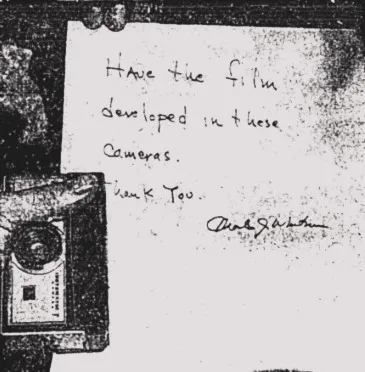
Photo: Press photographer., Public domain, via Wikimedia Commons
The venue is never truly empty when Alicia Matthew writes her note. The audience is gone, the house lights are up, and the load-out has started in the way it always does—cases rolling, tape peeling, someone calling out a case number near the loading dock. But back in the dressing room, there is a small patch of quiet. A single sheet of paper. A pen that isn’t running out anytime soon. And Alicia, sitting down like she has all the time in the world, even though the bus is idling.
The Ritual, Minus the Ceremony
It would be easy to mistake this for a meet-and-greet leftover or a stack of pre-printed thank-you cards. It isn’t. There’s no box of cards, no assistant with a clipboard, no template saved on a phone. Alicia writes each note by hand, usually after the post-show line has wrapped and before she changes out of her stage clothes. The paper is whatever the venue left on the table—letterhead, a blank page from a spiral notebook, once a folded piece of printer paper that a venue manager apologized for. She has written on all of it.
The ritual takes maybe ten minutes. Sometimes less. But it’s the ten minutes her tour manager, Dana Ruiz, has learned to protect. ‘We don’t schedule anything over it,’ Ruiz says. ‘Not a departure time, not a photo request, not a quick call. She’ll do those things, but the note comes first. It’s not a flex. It’s just how she closes the night.’
What Actually Goes on the Page
The notes are not long. They are not speeches. They are specific in a way that generic gratitude never is. Alicia tends to mention one or two people by name—the monitor engineer who fixed a feedback problem during soundcheck, the stagehand who found her a better chair, the front-of-house person who walked her through the room’s odd sightlines. She’ll reference a small moment from the day: a joke in the hallway, a meal that showed up when nobody asked, a local detail she noticed on the drive in.
She doesn’t write ‘thanks for having me.’ She writes something closer to: ‘The house sounded warm by the third song—thanks for riding the vocal with me.’ Or: ‘Tell Marcus the cable wrap on stage left saved my ankle and my dignity.’ The tone is casual, but the attention is deliberate. She is not performing gratitude. She is practicing it.
‘I want them to know I saw them,’ Alicia said in a brief conversation after a recent show in Cleveland. ‘The crew is there before I am and there after I leave. If I can’t remember one thing they did, I wasn’t paying attention.’
Why It’s Non-Negotiable
There is no contractual reason for the note. No venue has ever asked for it. It is not part of a sponsorship deal or a social media campaign. In fact, Alicia rarely posts about it. That’s partly why it has stayed a quiet part of her routine: it belongs to the room, not the feed.
But it has become non-negotiable in the way that small, load-bearing habits often do. Skip it once, and the night feels unfinished. Her team knows the signs. If the note isn’t written, Alicia is not ready to leave. She’ll sit on the edge of the table, pen in hand, until the sentence comes. It always does.
What Venue Managers Do With Them
Ask around, and the notes start to surface. A venue manager in Minneapolis keeps one taped inside a cabinet in the production office. A stage manager in Austin has a folder of them—not just from Alicia, but from other artists—and says hers is the only one that mentioned the loading dock’s loose step. In Portland, a front-of-house engineer framed one and hung it near the soundboard. ‘It’s not a big thing,’ he said. ‘It’s just nice to be seen.’
That phrase comes up again and again. The notes are not framed because they are from a famous person. They are framed because they are specific. They remember a name, a detail, a small act of care that would otherwise vanish with the night.
The Small Economics of Remembering
Alicia’s team is careful not to frame the notes as networking. They are not a strategy for better treatment next time. But anyone who has worked in touring knows that crews talk. They remember who was easy, who was difficult, who said thank you and who didn’t. The note doesn’t guarantee anything. It just adds something small and human to the ledger.
‘She’d do it if no one ever mentioned it again,’ Ruiz says. ‘That’s the whole point.’
A Habit That Travels
In an era of tagged posts and QR codes and thank-you messages typed with a thumb, a handwritten note is slow. It requires a pen that works. It requires sitting still when the room is being packed up around you. It requires believing that the person who coiled the cables and the person who bought the ticket deserve the same kind of attention.
Alicia Matthew is not trying to make handwriting a movement. She is just closing her night the way she knows how: with a sentence or two, a name, a small detail, and a pen left on the dressing room table. The note will be found later, after the bus has pulled out. Someone will read it. Someone will keep it. That’s enough.