No Mirror, No Audience: Why Alicia Matthew Warms Up in the Stairwell

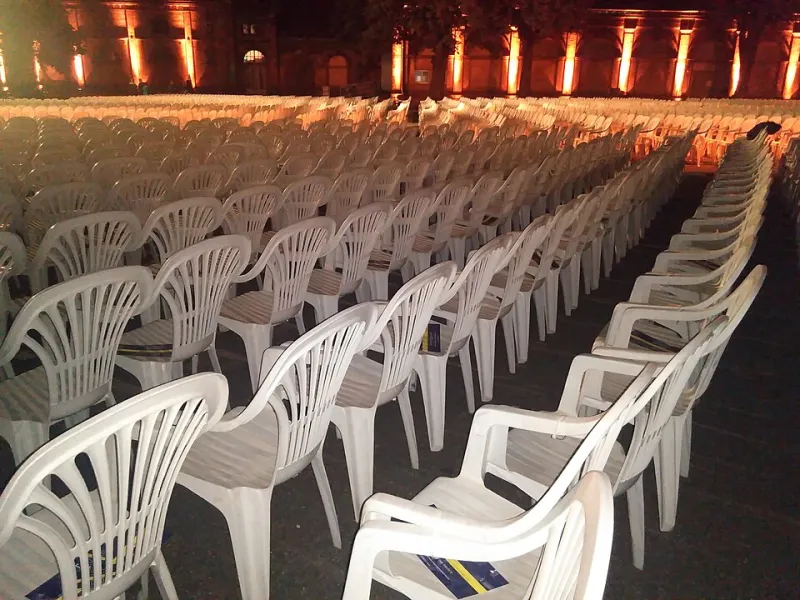
Photo: Pedro Ribeiro Simões from Lisboa, Portugal, CC BY 2.0, via Wikimedia Commons
Ask anyone on Alicia Matthew’s crew where to find her ninety minutes before downbeat and they won’t point to the green room. They’ll point to a door most people never open: the stairwell.
It’s not a bit. It’s not a superstition she picked up from an old vocal coach. For the past several tours, Matthew has done her pre-show vocal warm-up in venue stairwells—eleven minutes of breathing, lip trills, scales, and what she calls “quieting the room in my head.” The routine is short by design, strange by reputation, and surprisingly practical.
Why the Green Room Loses
Green rooms are social spaces. They’re where promoters stop by, where friends-of-friends hover, where someone always wants a photo before you’ve had water. For a lot of artists, that’s fine. For Matthew, it’s the opposite of preparation.
“I don’t need to be on before I’m on,” she said during a recent tour stop. “The green room is lovely. It’s also twelve conversations happening at once. The stairwell is one conversation.”
There’s an acoustic reason, too. A carpeted green room absorbs sound, which makes a voice sound smaller and duller than it will in the room. A concrete stairwell does the opposite: it reflects. You hear pitch drift immediately. You hear tension in the jaw. You hear whether the breath is actually supporting the note or whether you’re just pushing.
And then there’s the simple fact that stairwells are unclaimed. No one has set up a merch table there. No one has hung a sponsor banner. It’s a transitional space, and Matthew treats it like one—a place to move from offstage to onstage without an audience watching the transition.
Eleven Minutes, Three Movements
The routine isn’t a secret, but it is specific. Matthew breaks it into three roughly equal parts, timed on her phone but not watched closely.
The first three or four minutes are breathing and lip trills. Nothing loud. She’s checking in with her body after load-in, after a bus ride, after talking over soundcheck. The goal is to find out what kind of voice she has today, not to force the voice she had yesterday.
The middle section is scales—ascending and descending, mostly on vowel sounds, never at full volume. She works through the passaggio carefully, the way you’d walk across a floor you know is slippery. If something catches, she backs off. The stairwell rewards restraint because it amplifies everything else.
The final three minutes are quiet. Humming. A few spoken lines from the show. Sometimes just standing still and listening to the building. Matthew has described this part as “making the room smaller,” which sounds abstract until you remember that a stairwell is about as small and contained as a venue gets.
The Reverb Doesn’t Lie
The most useful thing about a stairwell is that it tells on you. In a dry room, a singer can convince themselves that pitch is centered when it isn’t. In a stairwell, the note either locks in or it doesn’t. There’s no hiding behind a monitor mix or a reverb pedal.
Matthew uses that honesty to calibrate. If the stairwell sounds bright and brittle, she knows she’s pressing. If it sounds swallowed, she knows she’s not opening up. The feedback loop is immediate, and it’s free.
There’s a practical benefit, too: she can sing at 70 percent and still hear exactly what’s happening. That matters on a long tour leg, when the temptation is to over-sing in the warm-up and arrive at the show already tired.
Built for Long Legs
Matthew’s touring schedule in 2026 has been steady but not punishing—mostly theaters, a few festivals, a handful of radio shows. Even so, the wear and tear adds up: dry bus air, dusty load-ins, shouting over a loud room, late dinners, early flights.
The stairwell routine is a hedge against all of it. It’s short enough that she’ll actually do it on a day when the schedule is tight. It’s private enough that she doesn’t have to perform wellness for anyone. And it’s physical enough—climbing a few flights, standing rather than slouching on a couch—that it doubles as a reset.
The routine got locked in after a rough spring 2023 run when she lost her voice for three days mid-tour. Since then, she’s asked venue managers for one thing in advance: access to a stairwell, ideally not the one by the loading dock. Most say yes. The ones who say no get a green room with the lights dimmed and the door closed, which is the next best thing.
What It Says About Pressure
The interesting thing about the stairwell warm-up isn’t the scales. It’s the boundary. Matthew isn’t preparing to be perfect. She’s preparing to be calm. The eleven minutes are a small, repeatable structure she can carry into any building, any city, any size of room.
That’s the part worth stealing, whether you sing for a living or not. High-pressure moments rarely reward last-minute effort. They reward a short routine you trust enough to actually follow. Matthew’s just happens to involve a concrete stairwell and a phone timer.
When the eleven minutes are up, she walks back through the door, down the hall, and into the room where the audience is waiting. The stairwell stays empty. It’ll be there again tomorrow night, in a different city, with the same honest echo.