Side A Is the Truth: Alicia Matthew's Case for Taping Rehearsals on Cassette
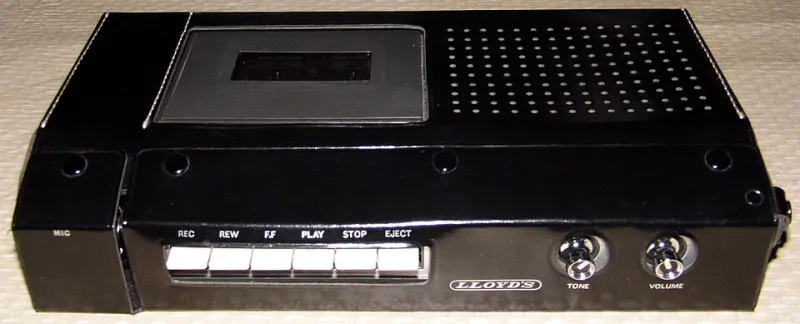
Photo: Joe Haupt from USA, CC BY-SA 2.0, via Wikimedia Commons
The room she rents for rehearsal has the usual stuff in it — a drum kit with a dented floor tom, two folding tables of cables, a coffee maker that somebody unplugged and never plugged back in. The first thing that gets switched on, though, isn't an amp or a keyboard. It's a cassette deck the size of a hardcover book, sitting on a chair with a towel folded under it so it doesn't rattle.
Alicia Matthew presses the record button, watches the little red light come up, and only then picks up her guitar. The phone stays in her bag. It stays there for the whole run-through, and it stays there when the band breaks for lunch.
"People assume it's a nostalgia thing," she says, threading a fresh 60-minute tape out of its wrapper. "It's not. It's a discipline thing. The tape is the only recorder I've found that won't let me cheat."
The Phone Stays in the Bag
Matthew has nothing against phones, exactly. She uses one to keep her calendar, and she'll text a voice memo to her bandleader when a bridge needs another bar. What she won't do is let one sit on a music stand during a full run-through.
The reasoning is practical before it's romantic. A phone on a stand is a screen on a stand, and a screen on a stand is a small standing invitation to check something. Worse, a phone produces a file she can scrub through. Scrub through anything enough and you stop hearing the song and start hearing a series of moments you can tidy up later.
"When I know I can cut it up, I start performing for the edit," she says. "I start thinking about the fix instead of the take. Forty minutes in, I'm not in the song anymore. I'm in post-production."
A tape doesn't offer that out. What goes down is what happened.
Forty-Five Seconds to Flip, Half an Hour to Commit
She uses 60-minute cassettes, which works out to about thirty minutes a side. A twelve-song set doesn't fit on one side, and that's the point. Side A takes the first half. Then the tape runs out, the button pops up with a mechanical clack, and everyone in the room has to stop while she turns the cassette over.
That pause has become a feature, not a bug. It lands roughly where an intermission would in a longer show. The band resets. Matthew walks around. Somebody refills a water bottle. By the time side B is rolling, the second half of the set gets its own clean start instead of being a continuation of whatever energy the first half left behind.
"There's a physical limit on the thing," she says. "I can't ignore it. So the rehearsal is shaped by it. And honestly, that shape is closer to a real night than anything I've come up with on purpose."
What She Actually Listens For
She doesn't listen back in the room. The tape goes home with her, and the next morning it gets played on a boombox on the kitchen counter, with a notebook and a pen and nothing else.
The no-guitar part is deliberate. If an instrument is within reach, she'll start fixing things in the moment and the notes never get written. Listening without an instrument keeps her in the role of an audience member who happens to know the material.
The list she keeps is short and specific. Tempo drift, mostly — not the tempo at the top of a song, but the tempo at the end of it, which is usually the honest number. Whether her breath shows up in the third verse in a way that reads as effort instead of intention. Whether the two seconds between songs are a transition or a stall. Whether a joke she told the night before still works when there's no laughter coming back at it.
"You find out fast which banter is banter and which banter is filler," she says. "On tape, with no crowd, the filler is really obvious. It sounds like a person buying time."
She also listens for the things that are good and might get lost. A harmony that landed by accident. A guitar part she simplified because she was tired and it turned out better than the written one. Those get circled, not just the problems.
Three Notes, Maximum
By the end of a playback session she has a full page, and then she cuts it down to three items. Three is the ceiling. Anything past three is a wish list, and a wish list gets ignored in favor of the loudest item on it.
The three notes go on a sticky note that gets stuck to the top of the tape case. Next rehearsal, those are the only things anyone is asked to think about. Everything else stays where it belongs — on the recording, waiting.
The Shelf in the Hallway
Matthew keeps the tapes. Not for any grand archival reason; they live on a shelf in a hallway, labeled in marker with a date and a city and, occasionally, a one-word review like loose or good. She rarely plays one back twice. The value is in the fact that it exists and can't be quietly deleted. A digital folder of takes gets cleaned out every few months. Cassettes are harder to throw away, so the record stays honest about how many times a thing was tried and how many of those tries were bad.
"Somebody once asked me if I'm going to digitize them," she says. "I said no. The whole reason they work is that they're a pain in the neck to deal with. The minute they're convenient, I'll stop trusting them."
A Red Light You Can Feel
There's a sound the deck makes when the button goes down — a firm, slightly stiff click that you feel through the chair it's sitting on. Matthew says the room changes when it happens. Players sit up a little. Nobody talks over a take. A cassette recorder with one tape in it announces, out loud, that this pass counts and there won't be a fourth one.
She'll still record to a hard drive when the work calls for it. Demos need files. Arrangements need files. But the run-through, the messy middle part of the job where a show is actually built, stays on tape.
"It's not that the tape sounds better," she says, popping the cassette out and sliding it into its case. "It's that it asks me for something the phone never does. It asks me to be patient with one version of the truth."